
You Should Just Stop
Why doing more is not making us happier

Everyone’s in such a rush all the time, running around, chasing after anything and everything. More money, more tech, the newest fashion, that amazing promotion, that gorgeous girl, hopes, dreams, and aspirations, the next big cure.
Our culture has shifted into one that encourages endless pursuits. Unskippable ads try to sell us masterclasses with the best of the best, so that we can become the best of the best. Social media platforms push us towards a mythical spotlight that is sure to bring us fame, validation, and money. Technology that we use daily convinces us that we have to be more, to be the best. Choose the right app, the right phone, the right OS, and your photos will be the best photos, your writing will be better than ever, your productivity will skyrocket! Can’t you see you don’t yet look pretty enough? You don’t manage your time well enough. Your skin is not smooth enough. Your teeth can be so much whiter. Why are you still aging? Your job is out of style. You’re way too poor. Your parenting is faulty. You don’t have the right mindset, which is why you’re not where you should be in life. Still not making money online? You’re not using A.I. to its full capacity. Use more A.I. Be a trendsetter! Have the best new idea!
Morning to night, we never stop. To stop means we’re wasting time, losing opportunities, not making money.
It’s exhausting. Are you not exhausted?
The message we receive is that we can be in control. We should be in control, and control is something we enjoy. It makes us feel safe and confident. Our experience of the world is shaped by the illusion of control. To consider we might just be carried around by the current of existence is a terrifying thought, because ‘if I am not in charge, then who is?’
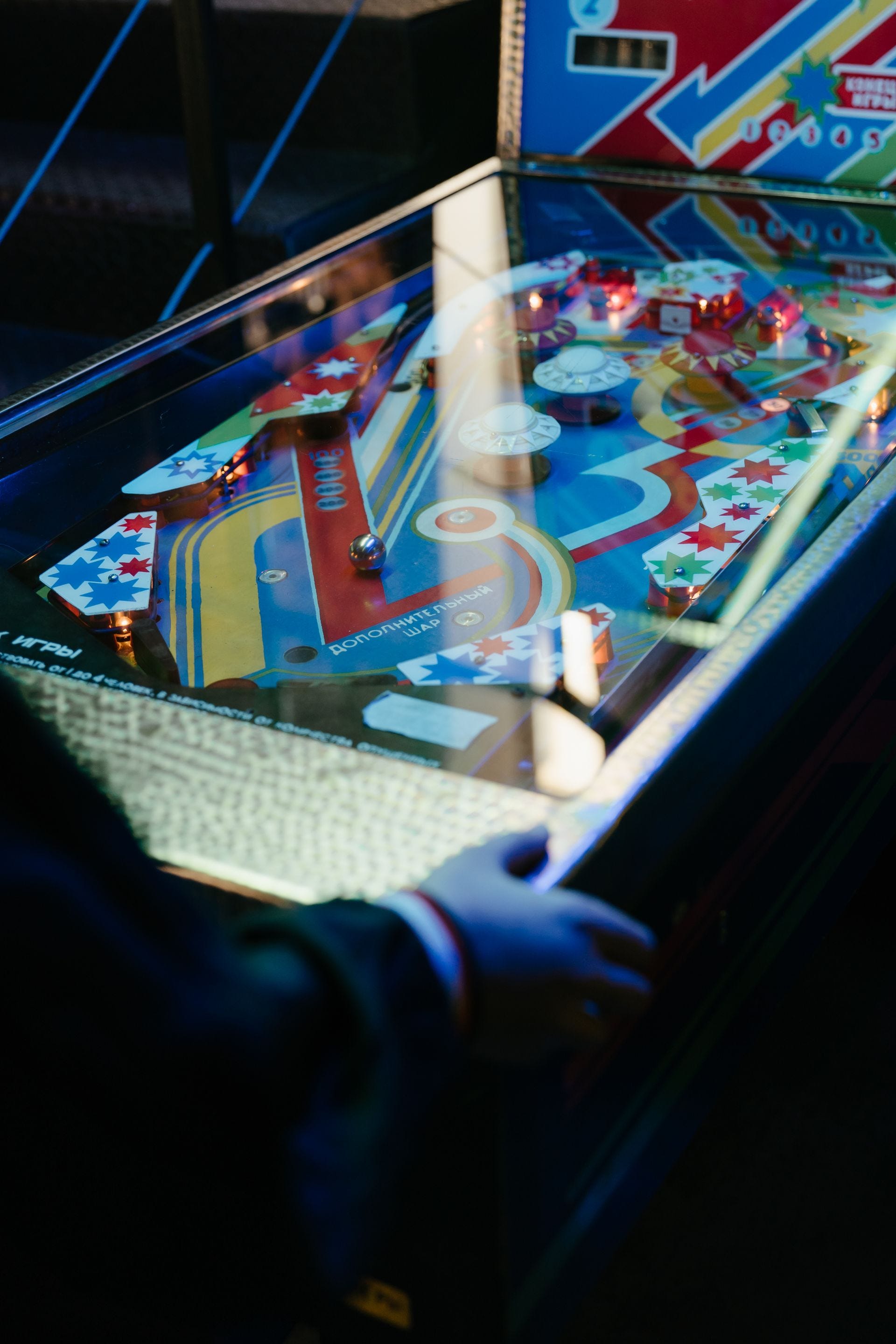
But, you’re not in charge. Not as much as you think you are, at least. Sure, you make plans, you come up with ideas, and you jump into action, but you’re not a solitary being in a vacuum, with no friction or resistance from any side. Causes and conditions all around us, like the flippers and pins in a pinball machine, alter our course and catapult us in random directions. At all times, we find ourselves faced with new choices of how to react to the unforeseen changes that occur. The way we react is seemingly a matter of control. It is our own choice. We forge our own path. However, what if what we react to is distorted and unclear? Can we trust what we experience? That’s the big question.
There’s this line I always repeat, which is “everywhere we turn, we run into ourselves”. I use this to make the point that we only react to our perception of reality, and not reality itself. When I see an apple, I react to my idea of the apple, its shape, color, taste, and my memories attached to it. When I talk to someone, I react to how I interpret what they say, and not to their actual words or intentions. If the mind has something catalogued as bad, unpleasant, annoying, evil, or unwanted, then, whenever it encounters that thing, that’s how it’ll see it and present it. It’s a lifetime of accumulated conditioning, and the process is ongoing.
So, ask yourself then: how often am I in charge of how I experience my life, and how often am I simply a victim of my own mind?
Even the answers to those questions can’t be trusted. It is the nature of delusion to be inconspicuous and deceitful. It wouldn’t be very effective if it were something we were constantly aware of. On top of that, we stay so busy with the constant running around that we don’t really have a chance to become aware of the mind’s workings. How could we, if we never stop?
The great Buddhist master Thich Nhat Hanh once said that to stop is the word of the Buddha. The Buddha himself was someone who ran around in a relentless chase for years. He ran from home life into the life of a mendicant. He chased awakening almost to the point of losing his life. He chased the next best teaching and the next great teacher. He chased freedom from the chasing itself. Even though he spent years in stillness and quietude, practicing meditation in various ways, using different techniques, he hadn’t actually stopped.
On the night of his enlightenment, the Buddha remembered a time when he was young, when, during a festival, he sat down under a tree, still and quiet, and unexpectedly entered into a state of deep mental calmness, awareness, and concentration. He hadn’t approached the tree with that intention; he wasn’t looking for anything, he wasn’t hoping for anything, he was simply taking a break from the noise of the festival. Remembering that, he realized that maybe there was something to that kind of stopping, that kind of stillness that goes past the body and the environment, and that comes from a place without false judgments and without desires for gain or accomplishment. Taking a different approach, one based not on striving but on balance and direct observation, is how he ended up attaining awakening that very night, after sitting under the Bodhi tree.
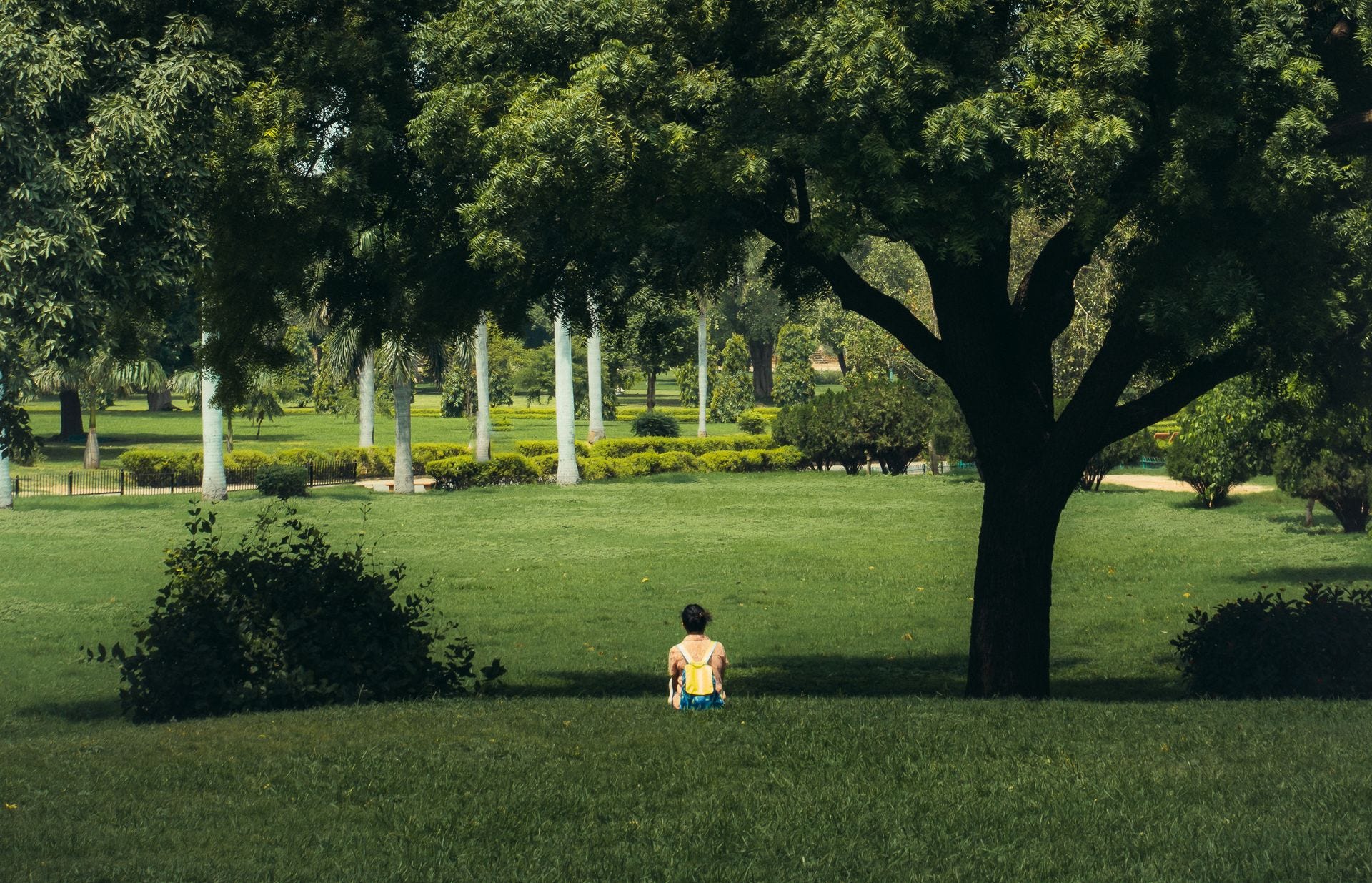
To stop, in the sense in which I want to present it here, is much more than simply finding seclusion and stilling the body. After all, we do that very often. We lie in bed with just our thoughts. We reflect, ponder, and daydream sitting in the car, on a bus, on a bench. Anyone who’s dealt with any form of depression, and this is by no means something that can be reduced to some simple explanation, knows the amount of isolation that comes with it. Some people find themselves unable to even get out of bed or off the couch for days, weeks in a row. The product of most of that ‘stopping’ is usually less than desirable. We reinforce our own ideas, feed negative emotions, make space for anger, resentment, hatred, jealousy, and sadness. We think ourselves into despair way too often. It looks like stopping, although it’s anything but that.
The good kind of stopping, the kind that leads us to insight, calm, and joy, is much more subtle and fluid. It comes from releasing the need to control. Our thinking mind works overtime to manipulate reality and negotiate with it. It latches on to what it likes and pushes away what it dislikes. It ignores what is in favor of what it would like to see. We think ourselves into suffering and believe we can think ourselves out of it.
To go beyond the thinking mind is the real stopping. Instead of thinking our experience of reality into pieces, putting a name to this, attaching an emotion to that, we can take the backwards step that simply shines the light onto it.
To think of the word “joy” is not the same as feeling joyful. Whatever definition of joy I might have created or accepted can’t contain the full experience of it. If I expect joy to always look and feel in a way that matches the tiny little concept I have of it, I’ll never be open to being truly joyful. Imagine how much joy you’ll miss out on if you refuse to accept it in forms that are unfamiliar to you. Take that and extend it to any other concept: love, gratitude, happiness, contentment, hatred, you name it.
To really stop means to do nothing but observe with eyes wide open. What does the experience of being you actually look like? Can you know what your next thought will be? What is the next emotion you’ll feel? What is the next sensation that’ll arise? Can you control any of it? Since you can’t, isn’t the smartest thing to become aware of how your reality is created moment by moment? You have to learn to stop to be able to do that.
The kind of stopping the Buddha teaches is not limited to sitting in a certain posture. It is not limited to just meditation. However, do not misinterpret this. The wisest thing anyone can do is set aside time daily to engage in this practice of just sitting and stopping, but it can’t be left on that meditation cushion or chair. We engage in formal sitting and train ourselves through direct experience so that we can stop anytime.
Learn to stop before that harsh word comes out, before that sadness overpowers your heart, before resentment takes over, before hatred plants roots, and before doubt paralyzes you. Learn to stop right in the middle of the pinball game. This kind of stopping is not the kind that stops the rolling ball in its path, but the kind that sees the entire table and grabs hold of the flippers when needed, knowing exactly when and how to gently nudge the ball with clarity, rather than flipping blindly in a panic.
If you want to actually be in control, be in control like that!